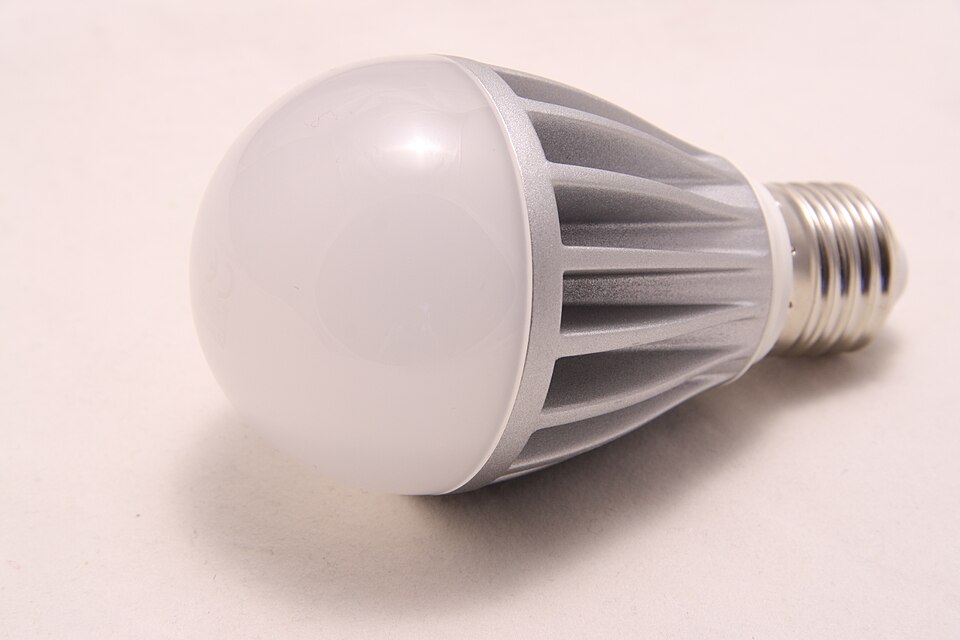
When comparing LED lighting, check color appearance, color fidelity, dimmability and useful life as separate features. The U.S. Department of Energy (DOE) distinguishes these qualities in its LED Basics overview[1].
CCT and CRI measure different aspects of color
Correlated color temperature, or CCT, is a simplified description of the appearance of the light itself. Color fidelity describes how that light affects the appearance of objects. The color rendering index, or CRI, is one way to measure fidelity. A CCT label therefore does not replace a color-fidelity rating.
DOE generally recommends a CRI of at least 80 for interior lighting and describes 90 or higher as excellent color fidelity. Keep the measure's limits in mind: CRI is particularly poor at predicting the fidelity of saturated reds.
Compare the complete lighting product
The LED component's efficiency and the efficiency of the device and fixture working together are different measures. DOE calls these source efficacy and luminaire efficacy, respectively. Fixture design, power-supply efficiency and other features also affect electricity consumption.
Check dimmability as its own feature when selecting a product. DOE advises choosing carefully to get the color qualities, dimmability and lifetime you want; LED products offer a range of performance levels at different prices.
Useful life describes fading, not every possible failure
Useful life is typically expressed as the number of operating hours until an LED lamp or fixture produces 70% of its original light output. That describes a reduction in output, rather than a guarantee that all its parts will keep working for that period.
The electronics can fail before the LEDs do. Color can also shift enough to become unacceptable for the intended use. Consider those aspects of reliability alongside the light-output rating when choosing a product.