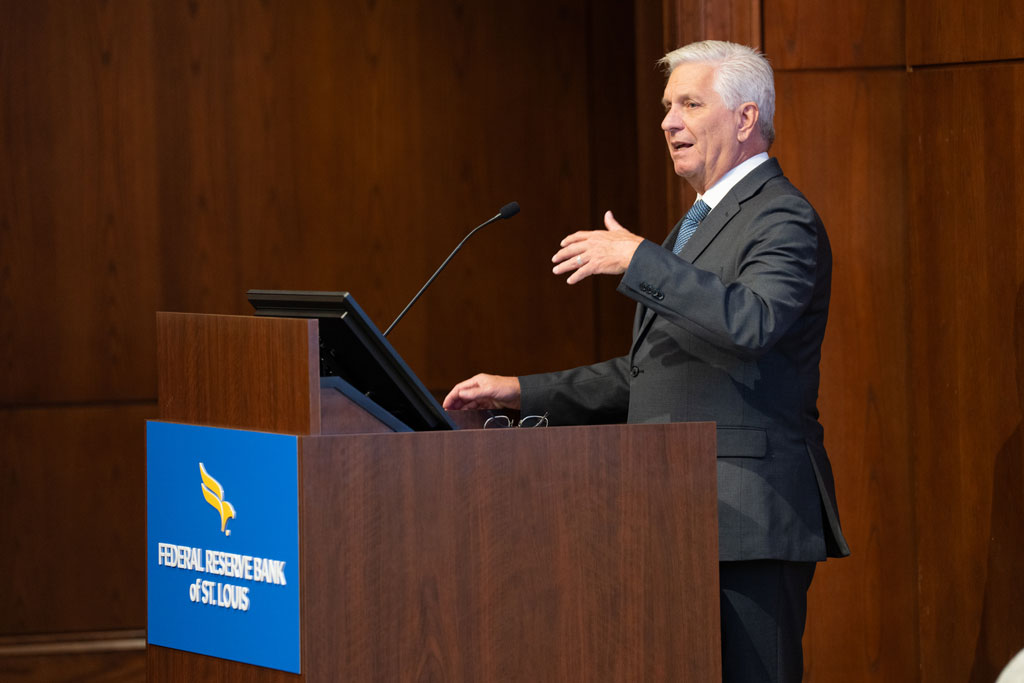
Federal Reserve Governor Christopher Waller said on October 8, 2026, that he expects further interest rate increases if economic data develop as anticipated, but sees room to vary their timing. Speaking at the Istanbul Economic Forum, he said the increases need not come at consecutive meetings.
His remarks followed the Federal Open Market Committee's September increase of 25 basis points, which brought its policy rate to a range of 3.75% to 4%. That was the first change after nine months on hold. Waller was explaining his own outlook, rather than announcing a new committee decision.
The case for higher rates rested on a change in the risks he saw facing the economy. Waller described the 2025 rate cuts as insurance against a slowdown amid a weakening labor market. By the first half of 2026, employment conditions appeared to be stabilizing, while inflation was no longer making enough progress toward the Fed's 2% goal.
He cited energy-price pressures from the Middle East conflict, higher high-tech consumer prices associated with the artificial intelligence buildout, and the risk of additional tariffs. His concern was that prolonged inflation would raise the future inflation expectations of consumers, investors and businesses that set prices.
Waller pointed to August core personal consumption expenditures inflation of 0.25% for the month and 3% over the previous year. That measure excludes food and energy. With September's labor market still looking solid and stable to him, he expected inflation to be the near-term focus of policy.
The September Summary of Economic Projections showed how widely that outlook was shared: 16 of 18 participants anticipated at least one more rate increase at the year's two remaining meetings. Four of those 16 expected two. Waller described those projections as a signal about the likely direction of policy, with decisions still depending on incoming data.
His discussion of a possible 75-basis-point increase was a hypothetical example of how central banks communicate, not a commitment to raise rates by that amount. He used three increases of 25 basis points to compare silence about future policy, a fixed schedule and a more flexible signal.
In Waller's account, silence risks surprising markets, while a fixed schedule can become inappropriate as data change. Signaling a likely direction gives markets information while leaving policymakers room to adjust the size and pace of increases.